
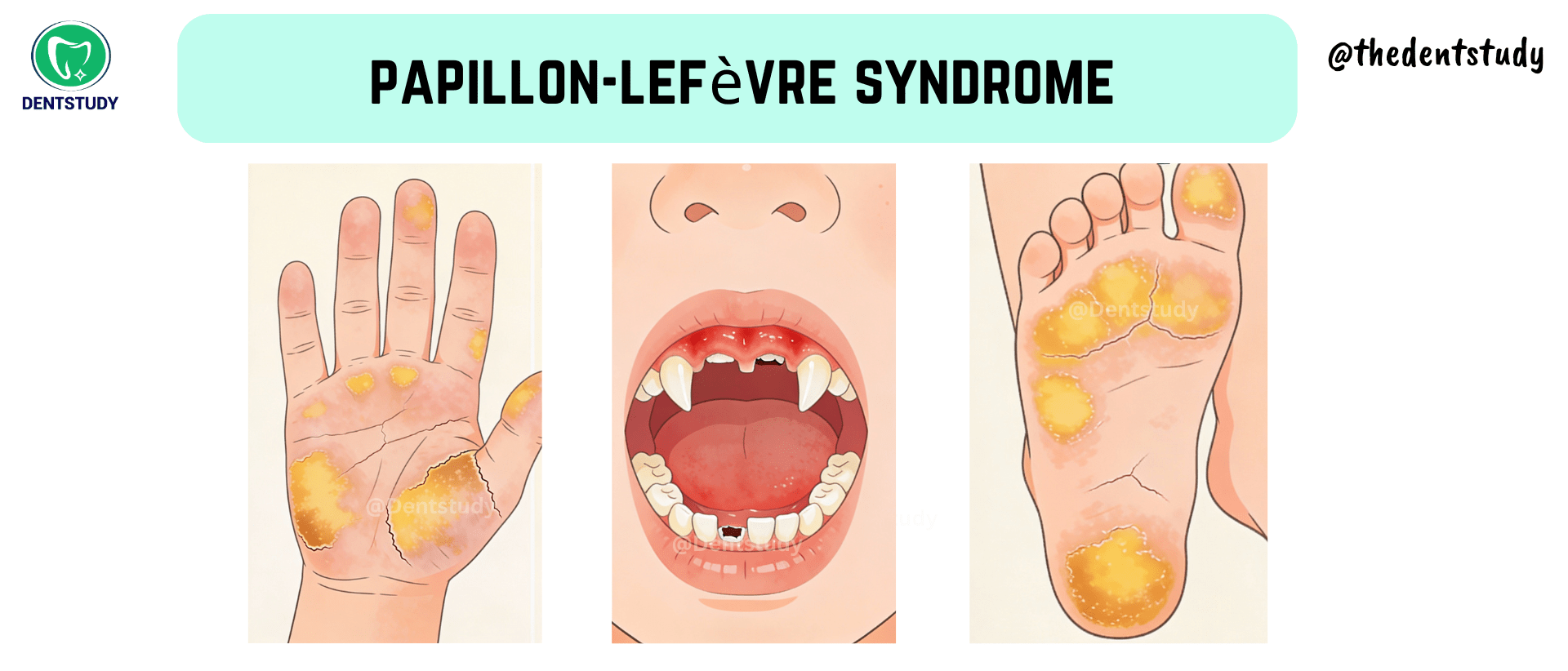
Papillon-Lefèvre Syndrome: Symptoms, Oral Manifestations & Key Features Explained
🔎 What Is Papillon-Lefèvre Syndrome?
Papillon-Lefèvre Syndrome (PLS) is a rare autosomal recessive disorder involving both skin and periodontal tissues.
It typically appears in childhood and is strongly associated with:
Severe early-onset periodontitis
Palmar–plantar hyperkeratosis
Early exfoliation of both primary and permanent teeth
The condition is linked to mutations in the Cathepsin C (CTSC) gene, which affects immune response and epithelial integrity.

📌 Key Oral Manifestations (High-Yield for Exams)
Papillon-Lefèvre Syndrome presents with dramatic dental changes early in life:
✔ Juvenile Periodontitis
Aggressive, rapidly progressing periodontal destruction involving both dentitions.
✔ Gingival Ulcers & Inflammation
Severe gingival swelling, redness, and bleeding.
✔ Gingival Enlargement & Pocket Formation
Deep periodontal pockets appear early → mobility → tooth loss.
✔ Early Tooth Exfoliation
Primary teeth may exfoliate by age 4–5, permanent teeth soon after eruption.
These features make PLS a must-know topic in Oral Pathology & Periodontology.
Would you like to continue reading?
Log in or subscribe to unlock the full premium note.
Log in to continue